ALIS Capital Management · Responsibility · Control

Real estate credit demands two judgements: on the capital structure, and on the asset.

ALIS Capital Management S.à r.l. combines credit, structuring and workout expertise with operational real estate, development and asset-management experience. The quality of a secured credit position can be derived neither from financial metrics alone nor from property value alone — what decides is whether capital structure, collateral, cash flow, business plan and repayment still fit together when conditions change.

As General Partner and Manager, ALIS is responsible for the investment management, portfolio monitoring and risk management of EcoTrust Debt Capital SCSp.

The Approach

Credit expertise alone is not enough. Neither is real estate expertise alone.

Classic credit assessment centres on the borrower's debt-service capacity; a purely real-estate view is dominated by location, use, rent and market value. EcoTrust brings both perspectives together. On the capital side: ranking, entry basis, covenants, collateral, creditor rights and recovery potential. On the asset side: substance, cash flow, lettability, capex, construction and timing risks, and the operational deliverability of the business plan.

In restructuring and special situations this combination is decisive. A formally secured claim is only as strong as the economic value and realisability of its collateral. Conversely, a good asset does not protect the lender if ranking, documentation or control rights are inadequately structured. ALIS therefore assesses not only whether a financing can be closed — but whether the resulting creditor position remains controllable over its entire life.

Management

Complementary experience along the entire credit position.

The management combines institutional credit and capital-markets experience with operational real estate expertise. This division of roles is not a juxtaposition of CVs — it is the basis on which every investment decision is examined both from the lender's perspective and from the perspective of the underlying asset.

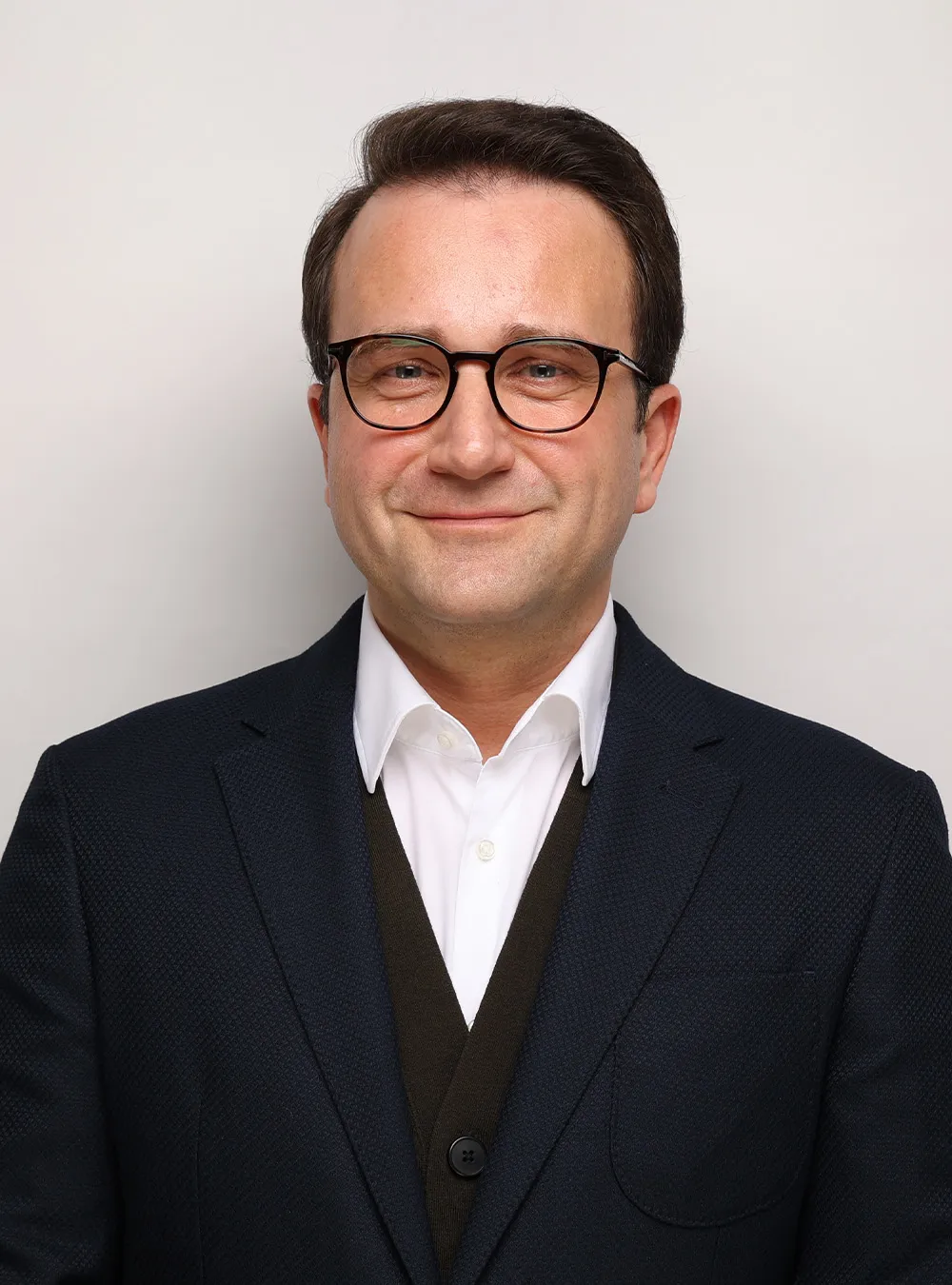
Dr. Norman Scherer

Dr. Norman Scherer, MBA

Structured Real Estate Debt · Capital Structuring · Workout

Norman Scherer has more than 20 years of experience in credit assessment, structured finance, real estate debt, corporate finance and institutional capital allocation. His career began in the corporate and credit business of Dresdner Bank. At Capmark Asset Management he analysed and monitored real estate loan portfolios across ranking levels. At Ernst & Young he worked in transaction advisory and audit on financing structures, real estate companies, investment vehicles and internal control systems.

As CFO of a German real estate platform he was responsible for financing strategy, treasury, risk management and the structuring of debt facilities totalling more than €150 million. Previously he worked within an international insurance platform on capital-intensive risk positions, cross-border reinsurance structures and regulatory financial management. In later mandates he advised institutional real estate credit platforms on origination, underwriting, capital structuring, servicing and workout — including the management and restructuring of real estate credit exposure of up to €600 million within a platform of around €1.2 billion assets under management.

Senior, whole-loan, bridge and mezzanine structures
Credit assessment and risk-adequate structuring
Workout, servicing and recovery of existing credit positions
Fund and investment structures in the Luxembourg AIFM environment
Institutional investors: pension institutions, insurers, asset managers
Investment-committee papers, scenario analysis and decision models
Cross-border transactions and complex stakeholder structures

For EcoTrust, his focus is capital structure, credit risk, collateral logic, institutional design and investor communication.

Markus Sadighpur

Real Estate · Development · Asset Execution

Markus Sadighpur has been active in the German real estate industry since the 1980s. His experience spans project development, general planning, project management, construction supervision, transaction advisory, structured finance and property, asset and capex management. He was a partner in a mid-sized real estate company and co-founder of the Düsseldorf real estate exchange. He later held a stake in an architecture and general-planning practice with up to 25 architects and engineers, working operationally across all planning, project-management and construction phases.

From 2002 he advised international investors on real estate and portfolio investments in Germany and Central Europe. In the course of prior activities, real estate portfolios worth more than €10 billion were reviewed and negotiated; properties worth more than €2.5 billion were acquired for investors; and property, asset and capex management was performed or supervised on a volume of around €300 million. Since 2012 his focus has been on proprietary and partnership real estate investments, the revitalisation of office and commercial properties, the creation of building rights and the operational stabilisation of standing assets — covering more than 100,000 sqm of office and commercial space across Germany, more than 300 apartments and over one million sqm of building land and land with development potential.

Assessment of property value, usability and marketability
Review of construction, capex, letting and timing risks
Project development and creation of building rights
Revitalisation, re-letting and operational stabilisation
Asset, property and capex management
Acquisition, financing and disposal of complex positions
Practical execution of restructuring and exit scenarios

For EcoTrust, his focus is the economic and operational assessment of collateral, the resilience of the business plan and the actual deliverability of stabilisation, realisation and exit.

Joint Decision Logic

Complementarity matters only if it changes the investment decision.

Every credit position is challenged from two independent directions. The credit perspective examines what amount is actually at risk, where the Fund ranks in the capital stack, which rights exist upon deviation and what net proceeds are achievable under realistic recovery assumptions. The real estate perspective tests whether cash flow, capex, letting, project progress and exit are technically and economically deliverable — not the theoretical market value, but the value that can actually be secured, stabilised or realised within a realistic timeline.

A transaction is not approved if only one of these perspectives convinces. A good asset does not compensate a weak creditor position. Strong documentation does not compensate an unviable business plan.

Governance

Governance must work before a position comes under pressure.

For EcoTrust, governance does not begin with reporting a problem that has already occurred. It begins with the clear assignment of responsibility, the documented derivation of every decision and the definition of concrete rights of action before capital is drawn. The aim is not an additional administrative layer — it is that risk assumptions are tested, deviations recognised early and necessary measures initiated without unclear responsibilities.

Management responsibility

Responsibility can be supported, but not outsourced. ALIS is responsible for implementing the investment strategy, selecting and structuring credit positions, portfolio management and ongoing risk monitoring. External specialists support commercial, legal, tax, technical and environmental review; central administration, fund accounting, audit, valuation and banking or depositary functions are performed by independent providers per the final fund structure. Decisions on investments, material contract changes, additional financings, restructurings and enforcement remain within the governance structure of ALIS and the Fund.

Investment Committee

The Investment Committee does not confirm transactions — it challenges them. Every new investment, material follow-on financing, capital-structure change, extension, restructuring, disposal and enforcement measure requires a complete decision paper disclosing the Fund's true economic entry basis, ranking and collateral structure, cash-flow and debt-service capacity, sponsor equity, downside, stress and recovery scenarios, primary and alternative repayment routes, portfolio impact and any conflicts of interest. Decisions follow the four-eyes principle; deviations from the underwriting guardrails require explicit justification and approval; meetings, risks, conditions and votes are documented. Where central risks cannot be closed, the transaction is rejected.

Risk management

Risk is not measured only at the point of investment. After drawdown, every position is continuously reviewed against its original underwriting assumptions: collateral value, LTV, DSCR and ICR, debt service, covenant headroom, liquidity reserves, project and letting progress, sponsor development, refinancing capacity and remaining tenor. Material deviations do not merely change a risk classification — they trigger defined action stages: deeper review, watchlist inclusion, additional information rights, liquidity protection, additional collateral, partial repayment, restructuring or preparation of orderly enforcement.

Independent control

Control requires institutional counterparties outside the Manager. The operating structure separates investment decision, administration, valuation, payments and audit. Central administration maintains fund and investor accounting and supports NAV determination; property values and material valuation assumptions can be reviewed by independent external valuers; the annual accounts are audited by an independent Luxembourg auditor. Legal, tax, technical and environmental advisers are engaged per transaction on merit and absence of conflicts. The specific appointments follow the final fund structure and are disclosed in the governing fund documents.

Alignment with Investors

Economic interests must stand in the same order as the capital invested.

The intended fund economics prioritise first the return of the capital contributed by the Limited Partners, then the contractually defined preferred return. Only thereafter does a performance-related participation of the General Partner arise. Under the current structuring, carried interest is subject to a fund-level clawback; qualifying monitoring, director or comparable fees received by the Manager from portfolio transactions are to be offset against the management fee.

A loan-level participation in realised Net Project Upside must not lead to a parallel, opaque remuneration of the Manager: it is income of the respective credit position and accrues first to the Fund; distribution at fund level follows the agreed waterfall exclusively. The definitive provisions derive from the LPA, the Private Placement Memorandum and the subscription documents.

Reporting

Transparency means showing development and deviation together.

Reporting informs investors not only about the current portfolio, but makes the change in risk position traceable. The intended quarterly reporting covers NAV and capital development, credit metrics, maturities, LTV and debt-service development, covenant status, watchlist positions, cash-flow forecasts and material changes against the original underwriting.

The annual report comprises the audited accounts and a consolidated view of performance, risk and material valuation assumptions. Material events — defaults, restructurings, enforcement measures, significant valuation changes, conflicts of interest or key-person events — are communicated outside the regular reporting cycle. Content, frequency and deadlines follow the final fund documents and any individually agreed information rights.

Regulatory Framework

A Luxembourg structure, clearly classified.

EcoTrust Debt Capital SCSp is structured as a closed-ended Luxembourg alternative investment fund in the legal form of a société en commandite spéciale. ALIS Capital Management S.à r.l. acts as General Partner and Manager. At the current stage of structuring, registration as a sub-threshold AIFM pursuant to Article 3(3) of the Luxembourg AIFM Law is being completed.

The Fund is not subject to product-specific supervision by the CSSF — distinguishing it from regulated Luxembourg product regimes such as RAIF, SIF, SICAR or UCITS. Decisive are the statutory requirements of applicable Luxembourg law, the Manager's registration and the contractual provisions of the final fund documents. This regulatory classification is disclosed to investors explicitly and without abbreviation.

Regulatory Disclosures

Experience and Track Record

A new fund — built on decades of experience.

EcoTrust Debt Capital SCSp is a first-time fund at the level of the specific investment vehicle; no historical fund performance can be attributed to EcoTrust. The management experience presented derives from personally attributable prior roles, board functions and advisory mandates, spanning multiple market cycles across credit assessment, financing, asset management, restructuring and enforcement.

Historical transaction volumes or project data do not represent performance of EcoTrust, ALIS Capital Management or the Fund. Deeper, verifiable track-record information can be made available to qualified investors in due diligence under confidentiality.

Institutional governance arises where competence becomes verifiable.

EcoTrust combines specialised credit and real estate competence with documented decisions, clear responsibilities and independent control functions — a continuous connection between investment thesis, underwriting, actual credit position, portfolio risk and economic result.

This page is addressed exclusively to professional investors. Prior experience is attributed to the relevant person, former mandate or platform and does not represent fund performance. An investment involves substantial risks, up to and including total loss. See Regulatory Disclosures.